The Future of Payments Is Layered: Trust, Data, Cards, and Automation
-
 BinaxPay Team
 - 03 Jun, 2026
- 12 mins read
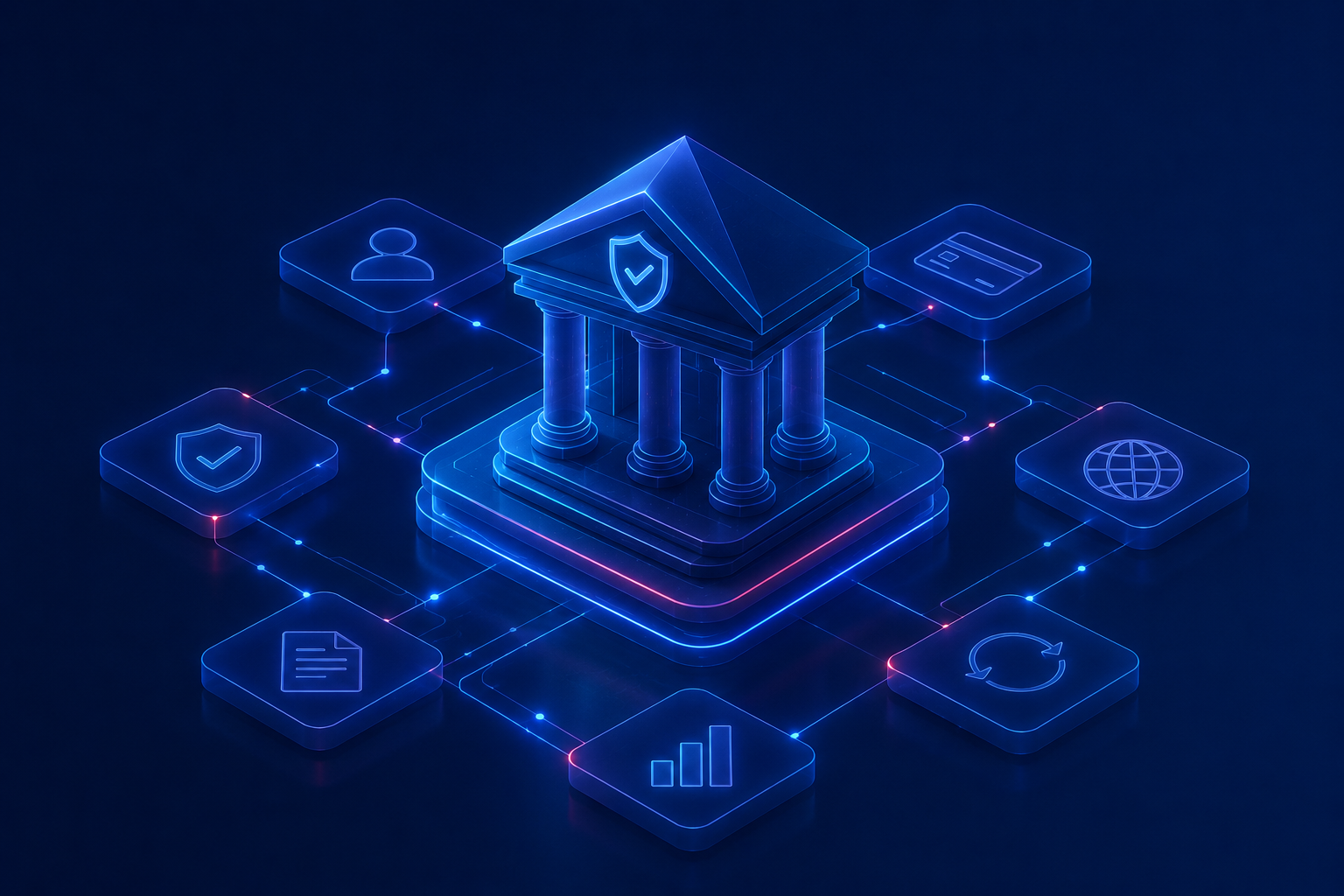
Payment modernization is often described as a race to replace the old with the new. Legacy systems are treated as the problem. Faster rails are treated as the answer. Every new payment trend is presented as if it will replace everything that came before it. But the future of payments will not be built by removing every existing rail. It will be built by layering smarter infrastructure on top of the systems businesses still depend on. Cards still matter. Bank transfers still matter. Accounts still matter. Compliance still matters. Reconciliation still matters. What is changing is the layer above them: the data, automation, controls, APIs, webhooks, approval flows, and intelligence that make payments easier to manage. For modern businesses, the real challenge is not only how fast money moves. It is how clearly, safely, and intelligently money moves through the business. A payment is no longer just a transaction. It is part of a wider workflow involving accounts, approvals, cards, suppliers, teams, currencies, compliance checks, reporting, and reconciliation. That is why the future of payments is layered. At the foundation are trusted financial rails and regulated money movement. Above that are the tools that make those rails more useful: business accounts, corporate cards, dedicated IBANs, payout workflows, approval rules, transaction data, APIs, webhooks, and audit-ready records. BinaxPay is built around this layered model, giving businesses a connected environment to manage money movement instead of forcing finance teams to work across disconnected tools.
Legacy Is Not Always the Rail — Sometimes It Is the Workflow
When businesses talk about legacy payments, they often think of old processors, slow bank portals, outdated interfaces, and rigid systems. Those issues are real, but they do not tell the full story. A business can adopt new tools and still operate in a legacy way if its finance workflows remain manual, fragmented, and difficult to control. A company may have digital accounts but still reconcile transactions manually. It may issue corporate cards but lack real-time spend controls. It may send supplier payments online but still approve them through email chains. It may use APIs but still keep finance data trapped across spreadsheets, dashboards, and disconnected systems. That is the deeper problem. Legacy is not only about the age of the technology. It is about whether the business can connect payments, data, controls, and operations into one coherent workflow. Modern finance needs structure. Accounts should connect to payouts. Cards should connect to limits and monitoring. Payment status should connect to internal systems. Approvals should create audit trails. Compliance should begin at onboarding. Reconciliation should be built into the payment flow, not treated as a cleanup task at the end of the month. The businesses that modernize successfully will not simply chase the newest payment method. They will redesign how money moves through their operations.
The Payment Stack Is Becoming Layered, Not Replaced
A layered payment stack recognizes that different rails solve different problems. Cards are useful for business spending, supplier payments, subscriptions, travel, procurement, and working-capital flexibility. Bank transfers are useful for vendor payouts, payroll-related flows, marketplace disbursements, supplier payments, and larger business transfers. Dedicated IBANs and sub-accounts are useful for separating funds by client, department, region, seller, or project. APIs and webhooks are useful for connecting finance to the systems that run the business. The opportunity is not to choose one rail and abandon the rest. The opportunity is to make every rail work better inside a connected finance layer. This is where BinaxPay’s model becomes relevant. Businesses can manage multi-currency accounts, dedicated IBANs, SEPA and SWIFT transfers, corporate cards, approval workflows, compliance controls, APIs, webhooks, and reconciliation tools from one connected platform. The unified platform layer for cards, payments, and FX shows how orchestration keeps these rails synchronized instead of siloed. Instead of treating each payment method as a separate tool, BinaxPay helps businesses organize accounts, cards, payouts, and reporting around the way they actually operate. That matters because companies no longer want payments to sit outside their business systems. A marketplace wants payouts connected to seller activity. A SaaS company wants billing and reconciliation connected to customer accounts. A logistics business wants contractor payments linked to operational milestones. An e-commerce brand wants supplier payments, card spend, and settlement records to be easier to track. Layered payments make this possible.
Cards Are Still Important — But They Need Better Controls
Commercial cards are sometimes treated as old infrastructure, but in business finance they still solve problems that newer rails do not always solve as neatly. For buyers, cards can support working-capital flexibility, controlled team spending, vendor purchases, subscriptions, travel, procurement, and online services. For suppliers, card acceptance can support faster payment collection and reduce delays in certain business workflows. The issue is not whether cards still matter. The issue is whether card programs are smart enough for modern business operations. A basic corporate card can create risk when finance teams only review spending after the monthly statement arrives. A smarter card program gives businesses real-time visibility and control before spending becomes a problem. That means:
- Transaction limits
- Merchant category controls
- Approval workflows
- Real-time alerts
- Usage monitoring
- Team-level permissions
- Clean records for reconciliation
BinaxPay cards are designed around this need. Businesses can issue virtual and physical cards, set spending limits, apply MCC rules, monitor activity, and manage controls in real time. Card control layers turn cards from simple payment instruments into governed finance tools. A company can create a virtual card for a software subscription, issue a controlled card for a marketing team, set category limits for procurement, monitor travel spend, or restrict vendor-specific purchases. Finance teams gain flexibility without losing visibility. Employees can spend where needed, while the business keeps control over budgets, categories, approvals, and records. In the layered future of payments, cards are not disappearing. They are becoming more programmable, more controlled, and more connected to the rest of the finance stack.
Trust Is the Foundation of Payment Modernization
Every payment system depends on trust. A business needs to trust that its accounts are secure, that only approved users can move funds, that suppliers are verified, that cards are controlled, that data is protected, and that records can be reviewed when needed. This is why trust must sit at the base of any modern payment stack. Faster payments are useful only when the business can control:
- Who initiates the payment
- Who approves it
- Where funds go
- Which rules apply
- Which account is used
- Which recipient receives funds
- How the transaction is recorded
- How the payment can be reviewed later
For BinaxPay, trust is built through compliance-first infrastructure: KYB and KYC workflows, AML monitoring, role-based permissions, maker-checker approvals, secure access controls, audit trails, real-time monitoring, and detailed activity logs. Deeper context on embedding those controls appears in RegTech inside BinaxPay. These controls help businesses move faster without creating unnecessary exposure. This becomes especially important as payments become more automated. Automation without trust creates risk. APIs without permissions create risk. Cards without limits create risk. Payouts without recipient checks create risk. Real-time money movement without auditability creates risk. Trust is not a background feature. It is the foundation that allows automation, cards, APIs, and data to work safely.
Data Is the Intelligence Layer
Every payment creates data, but not every business can use that data well. In many finance teams, payment information is scattered across bank portals, card statements, spreadsheets, accounting tools, approval emails, and internal dashboards. The result is a lot of activity, but not enough visibility. Modern payment infrastructure should make transaction data useful from the beginning. A payment record should help answer basic operational questions:
- Who initiated the payment?
- Which account was used?
- Which supplier received funds?
- Which card was charged?
- What reference was attached?
- Which department approved it?
- Which currency was involved?
- What status is the payment in?
- Can it be matched to the correct invoice, client, project, or team?
This data is not only useful for accounting. It supports fraud monitoring, supplier management, treasury decisions, cash-flow visibility, customer support, internal reporting, and audit readiness. BinaxPay supports this data layer through dedicated IBANs, sub-accounts, real-time statements, smart references, webhook events, transaction logs, exportable reports, and audit-ready records. This gives businesses cleaner visibility across accounts, cards, payments, and payouts. The more structured the data, the easier it becomes to automate finance. Reconciliation becomes faster. Exceptions become easier to spot. Approvals become easier to review. Internal systems can receive updates through webhooks. Finance teams can spend less time chasing information and more time making decisions. Data turns payments from isolated transactions into business intelligence. Structured matching and settlement records are covered in ledger consistency, reconciliation, and settlement.
Automation Should Improve Control, Not Remove It
Automation is one of the biggest promises in payment modernization, but it must be handled carefully. In finance, automation is valuable only when it follows rules. A fast automated payout is not helpful if it bypasses approvals. An automatically issued card is risky if it has no limits. A payment workflow is incomplete if it does not create records for reconciliation. A connected API is dangerous if permissions and audit logs are weak. Good automation strengthens control. It prepares payments according to rules, routes approvals to the right people, sends real-time status updates, records every action, and gives finance teams clear visibility over what happened. BinaxPay supports this kind of structured automation through APIs, webhooks, approval flows, bulk payouts, card issuing, spend controls, transaction monitoring, and exportable records. API-driven banking explains how programmatic connectivity keeps those workflows aligned with the rest of the platform. Businesses can automate repetitive finance workflows while keeping governance in place. A marketplace can automate seller payouts while applying verification and release rules. A SaaS platform can connect billing activity to payment workflows. A logistics company can trigger contractor payments after operational milestones. An enterprise finance team can automate vendor payment runs with approval controls and status tracking. The goal is not to automate for speed alone. The goal is to automate in a way that makes finance more reliable, more visible, and easier to scale.
AI Has a Role, But Finance Still Needs Oversight
AI is becoming part of payment modernization, but finance is not a place where businesses can blindly automate decisions and hope for the best. Payments require precision. A wrong recipient, duplicate payout, suspicious transaction, incorrect approval, or reconciliation mismatch can create real cost. The strongest use of AI in payments is not uncontrolled autonomy. It is better intelligence inside governed workflows. AI can help detect unusual patterns, flag suspicious activity, identify reconciliation issues, surface supplier trends, monitor card behavior, and help finance teams understand transaction data faster. But AI should work inside a control framework. Businesses still need limits, approvals, audit logs, monitoring, human oversight, and clear accountability. The more intelligent the payment layer becomes, the more important governance becomes. BinaxPay’s infrastructure supports that kind of controlled environment. Accounts, cards, approvals, APIs, monitoring, and reconciliation tools create the foundation that automation and future intelligence can build on. AI may help finance teams move faster, but trusted infrastructure ensures that speed does not become risk.
Enterprise Payments Need Consumer-Grade Usability and Finance-Grade Control
Business users now expect financial tools to feel easier. They are used to fast checkout, instant notifications, clean dashboards, searchable records, and self-service experiences. They do not want corporate finance tools that feel slow, fragmented, or unnecessarily complex. At the same time, enterprise payments cannot simply copy consumer payments. A consumer transfer may only need confirmation. A business payment needs confirmation, approval, accounting context, supplier verification, auditability, and reconciliation. A consumer card may only need authorization. A corporate card needs limits, merchant category rules, monitoring, team controls, and reporting. The future of enterprise payments must combine both sides: Simple user experience and strong finance governance. BinaxPay supports this balance by giving businesses a modern interface for accounts, IBANs, cards, payouts, approvals, compliance workflows, APIs, and reconciliation. The experience should be easier for users, but the infrastructure behind it must remain secure, structured, and audit-ready. That is what modern companies need: finance tools that feel simple without becoming shallow.
Why BinaxPay Fits the Layered Future of Payments
BinaxPay fits the layered future because it brings the main building blocks of modern business finance into one connected environment.
Account Layer
The account layer gives businesses multi-currency accounts, dedicated IBANs, sub-accounts, roles, permissions, and real-time statements. This helps companies organize money by currency, client, region, department, project, or operational need.
Payment Layer
The payment layer supports SEPA and SWIFT transfers, bulk payouts, vendor payments, approval flows, and payment status tracking. This helps businesses move money with structure instead of relying on manual processes.
Card Layer
The card layer supports virtual and physical cards, spend limits, MCC rules, real-time alerts, and monitoring. This gives teams spending flexibility while keeping finance in control.
Trust Layer
The trust layer includes KYB/KYC, AML checks, secure access controls, audit logs, permissions, and compliance-ready workflows. This helps businesses protect money movement before, during, and after each transaction.
Automation Layer
The automation layer includes APIs, webhooks, payout workflows, card issuing, transaction events, and reconciliation support. This allows businesses to connect finance workflows with the systems they already use. Together, these layers help businesses move beyond disconnected finance operations. A business does not need one tool for accounts, another for cards, another for payouts, another for approvals, and another for reconciliation. It needs infrastructure that connects those workflows so finance teams can move faster with more control. This is the real future of payments. Not one new rail replacing everything else, but a smarter operating layer that makes trusted financial tools work better together.
What Businesses Should Ask Before Modernizing Payments
A business that wants to modernize payments should not start by asking only which new payment method to adopt. It should ask whether its current finance workflow is connected enough to support growth. Key questions include:
- Can we manage accounts, cards, and payouts in one environment?
- Can we create dedicated IBANs or sub-accounts for cleaner reconciliation?
- Can we issue cards with limits, category controls, and real-time monitoring?
- Can we automate vendor payouts without losing approvals?
- Can we track payment status without manual follow-up?
- Can we connect payment events to internal systems through APIs and webhooks?
- Can we export audit-ready records?
- Can compliance checks happen inside the workflow?
- Can reconciliation happen as part of the payment process instead of after the fact?
- Can finance teams understand every transaction clearly?
If the answer is no, the issue may not be the payment rail. The issue may be the layer around the rail. Modernization should make payments easier to control, not just faster to send.
Conclusion
The future of payments is layered because businesses need more than movement of money. They need trust, data, cards, automation, compliance, APIs, webhooks, and reconciliation working together. Trusted rails still matter. Cards still matter. Accounts still matter. Compliance still matters. What changes is how businesses use them. The winning payment infrastructure will be the one that makes these tools more connected, data-rich, automated, and easier to govern. BinaxPay is built for that direction. It gives modern businesses a connected finance layer for accounts, IBANs, cards, payouts, controls, compliance, APIs, webhooks, and reconciliation. Payment modernization is not only about replacing what came before. It is about building a smarter layer above it — one that helps businesses move money with speed, clarity, and control.