
-
 BinaxPay Team
 - 31 May, 2026
- 12 mins read
Modern Banking Infrastructure: How Technology Is Rebuilding Finance
Banking is no longer only about holding money. Modern finance is becoming faster, more connected, more automated, and more programmable. Businesses now expect financial services to work like modern software: accessible through dashboards, connected through APIs, supported by real-time data, and flexible enough to scale across markets, currencies, teams, and use cases. A modern company needs more than a basic bank account. It may need business accounts, multi-currency balances, dedicated IBANs, sub-accounts, cards, payout tools, approval flows, user permissions, compliance checks, reporting, reconciliation, and API connectivity. This is the new standard for financial infrastructure. BinaxPay is built around this shift. Instead of treating accounts, payments, cards, compliance, payouts, and reconciliation as separate systems, BinaxPay brings them together into one connected financial infrastructure layer for modern businesses and digital platforms. Why Traditional Banking Infrastructure No Longer Fits Modern Business Traditional banking systems were built for a slower and more manual world. They were designed around branch-based processes, paper-heavy onboarding, limited integrations, batch-based payments, static account structures, and delayed reporting. That model worked when businesses operated locally, payments moved slowly, and finance teams managed workflows manually. Modern businesses operate differently. They sell across borders. They pay suppliers in different countries. They manage remote teams. They use SaaS tools. They operate marketplaces. They need virtual and physical cards. They want automated payouts. They need clean reconciliation. They expect APIs, webhooks, and real-time status updates. They need compliance built directly into daily operations. A single traditional account is no longer enough for these workflows. Modern companies need financial infrastructure that supports how money actually moves through the business. That includes accounts, IBANs, cards, approvals, permissions, payout workflows, statements, compliance checks, transaction monitoring, reporting, and system integrations. BinaxPay is designed to give businesses this infrastructure in one platform. Finance Now Needs to Work Like Software Modern businesses do not want finance to sit outside their operations. They want financial tools connected to the systems they already use, including accounting software, ERP platforms, ecommerce stores, marketplaces, SaaS products, payroll systems, internal dashboards, and customer-facing applications. This is why API-first finance matters. With APIs and webhooks, financial workflows can become part of the product, not just a back-office task. A platform can create accounts, trigger payouts, issue cards, receive transaction updates, monitor balances, reconcile activity, and connect payment data directly into its own systems. BinaxPay supports this direction with developer-ready infrastructure for accounts, payments, cards, payouts, webhooks, reconciliation, and compliance workflows. This changes what banking can do for a business. A marketplace can automate seller payouts. A SaaS platform can embed financial services. A logistics company can streamline contractor payments. An ecommerce business can connect payment activity to accounting. A finance team can receive real-time updates instead of chasing manual reports. Modern banking infrastructure turns finance into a connected operating system for business. Multi-Currency Accounts Are Now Part of Business Infrastructure Businesses are no longer limited to one local market. Even small companies may receive revenue from international clients, pay overseas suppliers, manage remote teams, or operate across multiple currencies. This creates a clear need for infrastructure that can support global finance from the beginning. BinaxPay business accounts are designed to help companies manage money across currencies such as EUR, GBP, USD, and more, depending on availability, eligibility, and provider support. Businesses can use accounts, dedicated IBANs, sub-accounts, roles, permissions, statements, and reconciliation tools to organize financial activity more clearly. This matters because multi-currency operations can become complicated quickly. A company may need one account for client collections, another for supplier payments, another for regional operations, another for team spending, and another for platform settlements. Without structure, finance teams lose visibility. Reconciliation becomes harder. Reporting becomes slower. Dedicated IBANs and sub-accounts help solve this problem. They allow businesses to separate funds by client, team, project, region, seller, department, or operating unit. This makes it easier to understand where money came from, where it should go, and how it should be recorded. Modern banking infrastructure should not force businesses to manage global finance through one flat account structure. It should give them the tools to organize money intelligently. Payments and Payouts Are Becoming Automated Workflows Payments are no longer just manual transfers. For growing businesses, payouts are part of daily operations. Companies need to pay vendors, suppliers, contractors, sellers, partners, employees, affiliates, and international service providers. These payments often require approval rules, references, limits, status tracking, and reconciliation. BinaxPay supports structured business payouts through payment workflows such as SEPA, SWIFT, bulk payments, approval flows, payment references, and real-time status visibility, subject to account type, provider availability, and compliance requirements. This helps finance teams move away from manual payment handling. Instead of preparing every payment separately, businesses can structure payout operations around repeatable workflows. Payments can be reviewed, approved, sent, tracked, and reconciled in a more controlled process. This is especially important for:Marketplace seller payouts Supplier and vendor payments Contractor payments Payroll-related transfers Cross-border business payments Partner and affiliate payouts Platform disbursements Operational settlementsMoney movement APIs help platforms scale these payout patterns with clearer status, references, and integration into business systems. The value is not only speed. The value is control, visibility, and repeatability. Corporate Cards Are Becoming Smarter Finance Tools Corporate cards used to be simple spending instruments. Modern cards are different. Businesses now need cards that support team spending, software subscriptions, advertising, travel, procurement, vendor payments, and project-based budgets. They also need spending limits, merchant controls, alerts, approvals, and transaction visibility. BinaxPay cards are designed to support controlled business spending through virtual and physical cards, spending limits, transaction monitoring, card activity visibility, and permission-based management, depending on user eligibility and provider availability. This turns cards into part of the wider finance infrastructure layer. A marketing team can use a card for advertising spend. A procurement team can use a card for approved suppliers. A travel team can use cards with specific trip limits. A SaaS company can create virtual cards for subscriptions. A finance team can monitor spending without waiting for monthly statements. Corporate cards become more powerful when they are connected to roles, limits, controls, reporting, and reconciliation. Card control layers show how limits, merchant rules, and real-time visibility keep team spending aligned with policy. That is the difference between basic card issuing and modern card infrastructure. White-Label Banking Is Changing How Platforms Launch Finance Modern banking infrastructure is not only for companies managing their own internal finance. It is also for platforms that want to launch financial services under their own brand. A marketplace may want seller accounts and payouts. A SaaS platform may want customer wallets and embedded payments. A logistics platform may want driver or vendor settlement tools. A fintech product may want cards, IBANs, and account features. An enterprise may want internal finance workflows for teams and departments. Building this from scratch is expensive, slow, and complex. BinaxPay white-label banking infrastructure helps businesses launch branded financial services using pre-built components for accounts, IBANs, cards, payouts, onboarding, reconciliation, compliance controls, APIs, webhooks, permissions, and audit logs. This allows platforms to move faster while keeping financial workflows structured and controlled. The business does not need to rebuild every banking component internally. It can use BinaxPay infrastructure to launch, test, integrate, and scale financial services more efficiently. White-label banking is one of the clearest examples of how banking is becoming modular. Businesses can choose the financial components they need, integrate them into their product, and expand over time. Compliance Must Be Built Into the Platform Modern banking infrastructure cannot ignore compliance. As finance becomes more digital and embedded, businesses need stronger controls around onboarding, verification, transaction monitoring, permissions, approvals, audit trails, and reporting. Compliance should not be added after the product is built. It should be part of the infrastructure from the beginning. BinaxPay supports compliance-ready financial operations through KYB, KYC, AML screening, access controls, approval workflows, secure onboarding, transaction monitoring, and audit-ready records, depending on the product, market, user type, and regulatory requirements. RegTech inside BinaxPay describes how verification, monitoring, and audit-ready controls are embedded in the platform rather than bolted on later. This matters for businesses that manage money movement across customers, companies, vendors, sellers, partners, or internal teams. A platform onboarding sellers needs verification. A company sending supplier payments needs approval controls. A business issuing cards needs spending rules. A marketplace releasing payouts needs audit trails. A fintech product embedding accounts needs compliance workflows. A finance team managing multiple users needs role-based access. The more financial operations move into software, the more important governance becomes. Modern infrastructure must make compliance part of the workflow, not a separate burden. Reconciliation Is a Core Infrastructure Feature Reconciliation is often treated as an accounting task. For modern companies, it is much more than that. Reconciliation is part of financial infrastructure. Every payment, payout, card transaction, account movement, refund, settlement, or platform disbursement needs to be matched to the correct business record. That record may be an invoice, seller, supplier, department, project, customer, region, transaction reference, or internal cost center. When reconciliation is weak, finance teams waste time chasing data. They export spreadsheets. They compare reports manually. They ask other teams for context. They investigate missing references. They delay month-end close. BinaxPay helps reduce this friction through dedicated IBANs, sub-accounts, smart references, statements, webhooks, transaction logs, exports, and audit-ready records. Ledger consistency, reconciliation, and settlement explains how matching internal records to bank and partner activity keeps finance accurate as volume grows. This gives finance teams cleaner visibility. A supplier payment can be matched to an invoice. A marketplace payout can be matched to a seller. A card expense can be matched to a department. A regional account can separate local activity. A client IBAN can simplify incoming payment tracking. Modern banking infrastructure should make reconciliation easier as a business grows, not harder. Marketplaces Need Modular Finance From Day One Marketplaces are one of the strongest use cases for modern banking infrastructure. A marketplace does not only accept payments. It manages onboarding, seller verification, platform fees, payouts, refunds, disputes, settlement rules, multi-currency operations, reporting, and reconciliation. These workflows are difficult to manage through traditional banking tools. BinaxPay supports marketplace-style financial operations with onboarding workflows, KYB and KYC checks, payout structures, scheduled payouts, instant payout options where available, real-time webhooks, reconciliation tools, audit logs, and multi-currency support. This gives marketplaces a more scalable financial foundation. Instead of managing sellers, payouts, and reconciliation manually, platforms can structure these workflows through one infrastructure layer. A seller can be onboarded and verified. Funds can be tracked against platform rules. Payouts can follow approval or release conditions. Disputes can trigger controlled workflows. Statements and logs can support reconciliation. Webhooks can update internal systems automatically. Marketplace finance requires more than payment acceptance. It requires programmable money movement. SaaS and Digital Platforms Need Embedded Finance SaaS businesses and digital platforms increasingly need financial features inside their own products. They may need subscriptions, usage billing, customer wallets, partner payouts, card issuing, invoicing, account creation, or multi-currency collection. When these workflows are disconnected, product and finance teams lose efficiency. BinaxPay supports embedded finance through APIs, webhooks, accounts, cards, payouts, reconciliation, onboarding, and compliance workflows. This allows platforms to build financial capabilities directly into the customer experience. A SaaS company can automate partner payouts. A platform can create account-like structures for users. A fintech app can launch branded cards. A B2B tool can embed payment workflows. A marketplace can manage seller balances. A finance platform can automate reconciliation. Embedded finance is not only about adding payments. It is about making financial services part of the product experience. Security and Trust Define Modern Finance Technology can make finance faster, but trust keeps it usable. Businesses need to know that their financial infrastructure is secure, controlled, monitored, and auditable. Speed without security creates risk. Automation without access controls creates exposure. Embedded finance without compliance creates operational problems. BinaxPay is built around secure financial operations. This includes controlled access, role-based permissions, approval flows, monitoring, encryption, KYB and KYC processes, AML checks, transaction logs, and audit-ready reporting. Modern finance requires this foundation. Businesses need to move quickly, but they also need to know who did what, when it happened, why it happened, and how it can be reviewed later. Security is not a background feature. It is part of the value of modern banking infrastructure. What Modern Banking Infrastructure Should Include A strong modern banking infrastructure platform should include more than a digital dashboard. It should support the full financial operating model of a business. The most important capabilities include: Multi-Currency Business Accounts Companies should be able to hold and manage funds across different currencies, depending on eligibility and availability. Dedicated IBANs and Sub-Accounts Businesses need ways to separate funds by client, team, project, region, seller, or operating unit. Payments and Payouts The platform should support supplier payments, vendor payouts, payroll-related transfers, marketplace disbursements, and cross-border business payments. Corporate Cards Teams need controlled virtual and physical cards with limits, rules, alerts, and reporting. APIs and Webhooks Financial workflows should connect directly to business systems, apps, dashboards, accounting tools, and customer-facing products. Compliance Workflows KYB, KYC, AML, access controls, approvals, and audit logs should be built into the platform. Reconciliation Tools Finance teams need references, statements, exports, webhooks, and clean transaction records. White-Label Capabilities Platforms should be able to launch branded accounts, cards, payments, and financial workflows. Security and Monitoring Modern finance needs controlled access, transaction visibility, alerts, fraud monitoring, and auditability. BinaxPay brings these capabilities together for businesses that need scalable financial infrastructure. Why Modern Banking Infrastructure Matters Now The fastest-growing companies are not waiting for traditional banking workflows to catch up. They need finance that can support:International growth Remote teams Cross-border payments Supplier networks Digital marketplaces Embedded financial products Real-time reconciliation Corporate card controls Automated payouts Compliance-ready onboarding API-based workflowsModern banking infrastructure gives businesses the ability to move, manage, and control money with more flexibility. It helps reduce manual work. It improves visibility. It supports faster product launches. It strengthens financial control. It makes global operations easier. It connects finance directly to software. BinaxPay is designed for this environment. Accounts, IBANs, cards, payouts, compliance, APIs, webhooks, and reconciliation work together as one financial layer for modern businesses and digital platforms. Conclusion Finance is being rebuilt around technology. The old model of banking was slow, fragmented, and difficult to integrate. The new model is modular, API-first, compliance-ready, and designed for businesses that operate digitally from day one. Modern banking infrastructure gives companies the tools to open accounts, manage currencies, issue cards, automate payouts, embed financial services, control spending, verify users, monitor transactions, and reconcile activity more clearly. BinaxPay brings these capabilities together for businesses that need finance to move at the speed of their operations. Modern finance is no longer only about where money is stored. It is about how money moves, how it is controlled, how it connects to business systems, and how confidently a company can scale.

- BinaxPay Team
- 29 May, 2026
- 14 mins read
Real-Time Payments, Real-Time Risk: Why B2B Finance Needs Smarter Controls
B2B payments are becoming faster, more connected, and more automated. Businesses want supplier payments to clear sooner, vendor payouts to require less manual follow-up, marketplace sellers to receive funds reliably, and finance teams to track payment status in real time. Faster money movement can improve cash flow, strengthen supplier relationships, reduce operational delays, and help companies scale across markets. But speed also changes the risk. When payments move slowly, finance teams often have time to review, correct, approve, or stop a transaction before money leaves the business. When payments move in real time, that window becomes much smaller. A supplier payment can be released before a second check happens. A duplicate invoice can be paid before finance catches the error. A card transaction can go through before the monthly review. A marketplace payout can be sent before compliance, delivery, or dispute conditions are complete. That is why faster B2B payments need smarter controls. For modern businesses, the question is no longer only: How fast can we move money? The better question is: Can we move money quickly while keeping every payment approved, traceable, compliant, and easy to reconcile? This is where BinaxPay fits into the future of B2B finance. For programmable transfer and payout workflows at scale, see Money Movement APIs Explained. BinaxPay helps businesses manage accounts, IBANs, cards, payouts, approvals, APIs, compliance workflows, and reconciliation inside one connected financial environment. Real-time payments should not create real-time confusion. They should create real-time control. Why Speed Alone Is Not Enough Speed is valuable in B2B finance. A company that pays suppliers faster can build stronger relationships. A marketplace that releases payouts on time can retain sellers. A logistics company that settles contractors quickly can keep operations moving. A SaaS platform that automates billing and partner payouts can grow without adding heavy manual finance work. But speed alone does not solve the deeper problem. A fast payment still needs the right approval. A fast payout still needs the right recipient. A fast card transaction still needs the right spending rule. A fast transfer still needs a clear audit trail. A fast settlement still needs proper reconciliation. Without the right controls, payment speed can increase exposure. That is why B2B finance teams need infrastructure that combines speed with governance. BinaxPay supports this through multi-currency business accounts, dedicated IBANs, SEPA and SWIFT transfers, corporate cards, role-based controls, approval workflows, payout tools, APIs, webhooks, and audit-ready records. The goal is not only to send money faster. The goal is to send money correctly, securely, and with full visibility. B2B Payments Are Becoming Business Workflows In traditional finance operations, payments often happened at the end of a process. An invoice arrived. A department reviewed it. Finance approved it. A payment was sent. Accounting reconciled the transaction later. That model is no longer enough for businesses operating across multiple systems, teams, countries, vendors, and platforms. Today, payments are part of live business workflows. A supplier payment may depend on invoice approval, budget rules, user permissions, payment limits, and available balance. A marketplace payout may depend on seller verification, platform fees, dispute windows, delivery milestones, and split-payment logic. A corporate card transaction may depend on department rules, merchant category controls, monthly limits, and real-time risk signals. This means a B2B payment is not just a transfer. It is the final action in a controlled finance process. BinaxPay helps businesses build that process by connecting accounts, payouts, cards, approvals, IBANs, reconciliation, and APIs. Instead of treating every payment as a separate manual task, businesses can structure money movement around real operational rules. Modern B2B finance needs more than access to payment rails. It needs a smarter way to control how money moves. Finance Controls Must Happen Before Money Moves The biggest risk in real-time payments is applying controls too late. If approvals, supplier validation, fraud checks, reconciliation, or audit records happen only after payment execution, the business may discover a problem when it is already too late. In a stronger payment setup, controls happen before and during the payment flow. Before a payment moves, the system should help answer: Who created the payment? Does that user have permission? Is the amount within company policy? Is the supplier approved? Does this payment need a second approver? Is the payment linked to the correct invoice, client, project, or department? Is there a complete transaction record? Can finance reconcile it later without manual confusion? BinaxPay supports this type of control layer through role-based permissions, approval workflows, spend rules, audit logs, real-time alerts, dedicated account structures, and reconciliation support. A good payment system should not only confirm whether a transfer can be sent. It should help confirm whether the transfer should be sent. Supplier Payments Need Stronger Approval Workflows Supplier and vendor payments are one of the clearest B2B use cases for smarter controls. As companies grow, they often pay software providers, manufacturers, logistics partners, contractors, consultants, agencies, property managers, payroll providers, regional suppliers, and service vendors. The more suppliers a business manages, the harder it becomes to control payments manually. Weak supplier payment workflows can create problems such as: Duplicate payments Incorrect amounts Unapproved vendors Delayed approvals Missing payment references Poor reconciliation Unclear accountability BinaxPay helps businesses structure supplier payments with controlled workflows. Finance teams can use business accounts, dedicated IBANs, payment references, approval flows, bulk payout tools, and payment status tracking to reduce manual work and improve visibility. A payment can be prepared by one team member, reviewed by another, approved according to company rules, sent through the correct payment rail, and recorded for reconciliation. This helps businesses move faster without losing financial discipline. For B2B companies, that is the real value: payments become easier to manage, but not less controlled. Corporate Cards Need Real-Time Spend Control B2B finance is not only about bank transfers. Company spending also happens through cards. Employees and teams may need cards for software, advertising, travel, procurement, subscriptions, logistics, contractors, cloud services, testing, and day-to-day operations. If card activity is reviewed only after the statement arrives, finance teams are always reacting late. Real-time spending needs real-time controls. BinaxPay cards help businesses issue virtual and physical cards with limits, controls, monitoring, and approval workflows (see card control at BinaxPay). This allows companies to give teams the flexibility to spend while keeping finance rules in place. A company can create separate cards for departments, projects, vendors, or specific use cases. It can apply spending limits, merchant category restrictions, daily or monthly caps, real-time alerts, and transaction monitoring. For example: A marketing team can use a card limited to advertising platforms. A travel team can use cards with trip-based budgets. A procurement team can use controlled cards for approved vendors. A SaaS company can create virtual cards for subscription management. A logistics team can use cards with category and location controls. A finance team can monitor activity without waiting for end-of-month statements. This turns cards into part of the finance control system, not just a spending tool. Marketplaces Need Governed Payout Infrastructure Marketplaces and platforms face a different level of payment complexity. A marketplace does not simply collect money and send payouts. It may need to onboard sellers, verify business identities, split funds, deduct platform fees, hold balances, release payouts based on milestones, manage refunds, handle disputes, and reconcile activity across buyers, sellers, and the platform. That requires governed money movement. Marketplace payouts are often conditional. A seller may need to be verified before receiving funds. A payout may need to wait until delivery is confirmed. A dispute may require funds to be held. A platform fee may need to be deducted automatically. A refund may need to reverse part of a split transaction. A finance team may need to explain every payout decision later. BinaxPay supports marketplace and platform payment workflows with seller onboarding, KYB and KYC processes, split payouts, escrow-style holds, scheduled payouts, payout tracking, dispute workflows, refund handling, multi-currency settlement, webhooks, reconciliation, and audit logs. Instead of building complex payout and compliance logic from scratch, marketplaces can use infrastructure designed for controlled money movement. Reconciliation Should Not Wait Until Month-End Reconciliation is often treated as an accounting task. But in real-time B2B finance, reconciliation should be part of the payment flow from the beginning. If payments move quickly but reconciliation stays manual, finance teams still face delays, missing context, and unclear records. The company may know that money moved, but not which invoice it matched, which department approved it, which vendor received it, or which project it belonged to. That creates problems for reporting, audits, supplier support, cash-flow forecasting, and month-end close. BinaxPay helps businesses improve reconciliation through dedicated IBANs, sub-accounts, payment references, real-time notifications, transaction records, exportable statements, API events, webhooks, and structured reporting. This can help finance teams reduce manual spreadsheet work and make payment operations easier to understand. A supplier payment can be matched to an invoice. A seller payout can be linked to a marketplace transaction. A card expense can be assigned to a department. A regional account can separate local activity. A client account can keep funds organized. A webhook can notify internal systems when payment status changes. This is how businesses move from payment tracking to payment clarity. Deeper ledger and settlement discipline is covered in ledger consistency, reconciliation, and settlement. APIs Make B2B Payment Controls Scalable Manual finance workflows can work at small scale. They break down as volume grows. A finance team cannot manually monitor every payment, card transaction, supplier change, seller payout, refund, dispute, account event, and reconciliation record across a growing business. That is why APIs and webhooks are essential for modern B2B payments. BinaxPay's API-first infrastructure allows businesses to connect accounts, cards, payouts, and reconciliation workflows into their own systems. For core API and webhook vocabulary, see API banking, webhooks, and integration. Platforms can trigger payouts, create accounts, receive payment status updates, issue cards, monitor transactions, and automate reconciliation events. This is especially useful for SaaS platforms, marketplaces, fintech products, logistics networks, ecommerce operators, and enterprise finance teams. With APIs and webhooks, businesses can build workflows such as: Create a seller account after onboarding approval. Trigger a payout after a delivery milestone. Send payment status updates to an internal dashboard. Issue a virtual card for a specific department. Update spending rules based on project budgets. Push transaction data into accounting systems. Pause a payout when a risk rule is triggered. Notify finance when a transfer fails or requires review. This is where payment governance becomes programmable. Businesses do not need to choose between speed and control. With the right infrastructure, both can work together. Compliance Must Be Built Into Payment Operations B2B payments often involve verified companies, directors, shareholders, sellers, vendors, partners, and clients. That means finance infrastructure must support compliance from the beginning. Compliance cannot sit outside the payment workflow. If a business verifies a partner in one system, approves payments in another, sends payouts through a third, and reconciles activity manually, risk increases. Records become fragmented. Audit trails become harder to follow. Teams lose visibility. BinaxPay supports compliance-first operations through KYB and KYC workflows (see the KYC, KYB, AML, and CFT compliance dictionary), AML screening, onboarding checks, secure document handling, activity monitoring, audit records, and controlled access. For businesses that move money between companies, sellers, suppliers, or partners, this is essential. The goal is not to make compliance feel like a separate process. The goal is to make it part of the financial workflow itself. Verification, approval, payment execution, monitoring, reconciliation, and reporting should all connect. That is how B2B companies can move faster while staying controlled. What Smarter B2B Finance Controls Look Like A business preparing for faster payment operations should review its finance control layer carefully. The most important controls include: Role-Based Permissions Not every user should have the same access. Finance teams need to define who can view balances, prepare payments, approve transfers, manage cards, download statements, or change account settings. Approval Workflows High-value, sensitive, or unusual payments should require approval before funds move. This is especially important for supplier payments, new vendors, cross-border transfers, and marketplace payouts. Maker-Checker Controls The person who creates a payment should not always be the person who releases it. Separation of duties reduces internal risk and improves accountability. Payment Limits Businesses should be able to define limits by user, card, department, supplier, transaction type, region, or currency. Card Controls Virtual and physical cards should include spend limits, merchant category rules, real-time alerts, transaction logs, and restrictions that match company policy. Supplier and Counterparty Checks Businesses need confidence that payments are going to approved recipients, vendors, sellers, or partners. Real-Time Notifications Finance teams should know when payments are created, approved, sent, failed, settled, reversed, or flagged. Reconciliation Support Every payment should be easier to match to the right invoice, vendor, client, project, seller, department, or account. Audit Trails Every important financial action should be traceable, including account changes, approvals, transfers, card activity, user actions, and payout decisions. API and Webhook Automation Payment events should connect to business systems, accounting tools, dashboards, and operational workflows. BinaxPay is built around these practical control needs. It connects money movement with structure, visibility, and automation. Why BinaxPay Is Relevant to B2B Finance Teams BinaxPay is relevant to B2B finance because it supports the core workflows businesses need when they move money between companies, teams, vendors, sellers, departments, and markets. Business Accounts for Operational Finance BinaxPay business accounts help companies manage balances, currencies, IBANs, sub-accounts, transfers, statements, and payment workflows in a more structured environment. This is useful for companies that need to separate funds by region, client, project, team, or operating unit. Dedicated IBANs for Cleaner Money Movement Dedicated IBANs and sub-accounts help businesses organize incoming and outgoing funds. They can make reconciliation clearer and reduce confusion when many payments are moving across the business. For B2B companies, this is especially useful when managing suppliers, clients, departments, or platform users. Payouts for Suppliers, Sellers, and Teams BinaxPay supports payout workflows for vendors, contractors, sellers, payroll-related use cases, platform partners, and international operations. This makes it relevant for marketplaces, logistics companies, ecommerce operators, SaaS platforms, agencies, and enterprises. Corporate Cards for Controlled Spending BinaxPay cards help companies give teams access to funds while maintaining control through limits, merchant category rules, alerts, and monitoring. This supports finance teams that need to manage distributed spending without losing visibility. APIs for Automation BinaxPay APIs and webhooks help businesses automate account creation, payout status updates, card issuing, transaction monitoring, and reconciliation workflows. This is important for companies that want financial operations to connect directly into internal systems. Compliance and Audit Readiness BinaxPay supports KYB, KYC, AML processes, secure onboarding, monitoring, and audit records. This helps B2B companies manage financial workflows with better governance. Marketplace and Platform Payments BinaxPay is especially relevant for platforms that need seller onboarding, split payments, escrow-style holds, scheduled payouts, dispute handling, refunds, multi-currency operations, and reconciliation. These are high-control B2B workflows where payment speed alone is not enough. Practical Use Cases for BinaxPay Supplier Payment Operations A company pays multiple suppliers across different markets. BinaxPay helps structure payouts through business accounts, approval flows, payment references, SEPA and SWIFT transfers, bulk payout tools, and status tracking. Marketplace Seller Payouts A marketplace verifies sellers, accepts payments, deducts platform fees, holds funds when needed, and releases payouts on schedule. BinaxPay supports onboarding, split payouts, holds, payout workflows, reconciliation, and audit trails. Corporate Spend Management A growing business issues cards to teams and departments. BinaxPay helps finance teams apply card limits, merchant category restrictions, real-time monitoring, and transaction reporting. SaaS and Platform Automation A software platform embeds accounts, cards, payouts, or wallet-style workflows into its product. BinaxPay APIs and webhooks help automate finance operations behind the scenes. Multi-Currency Business Operations An international company manages payments across currencies and markets. BinaxPay supports multi-currency accounts, dedicated IBANs, global payouts, and structured reporting. Finance Team Reconciliation A finance team needs to reduce manual matching and spreadsheet work. BinaxPay helps organize payments through references, statements, sub-accounts, exports, and real-time notifications. The Future of B2B Payments Is Controlled Speed B2B finance is not moving toward speed alone. It is moving toward controlled speed. Businesses want faster payments, but they also need approvals, permissions, fraud controls, compliance checks, reconciliation, audit trails, and API-based automation. That is the difference between simply sending money and managing money movement properly. BinaxPay gives businesses the tools to support that shift. Accounts, IBANs, cards, payouts, approval flows, APIs, webhooks, reconciliation, and compliance workflows work together to help businesses move money with more confidence. Real-time payments can create real value. But only when finance controls are strong enough to keep up. Conclusion Real-time B2B payments create opportunity. They can improve cash flow, reduce delays, strengthen supplier relationships, automate payouts, and make finance operations more responsive. But faster payments also create faster risk. If businesses rely on disconnected approvals, manual reconciliation, weak card controls, unclear audit trails, and delayed risk checks, speed can create more problems than it solves. That is why smarter controls matter. BinaxPay helps businesses manage B2B finance with more structure through multi-currency accounts, dedicated IBANs, supplier payouts, corporate cards, approval workflows, APIs, webhooks, reconciliation, compliance checks, and audit-ready records. The future of B2B payments is not just real-time. It is real-time, controlled, and built for scale.

- BinaxPay Team
- 29 May, 2026
- 9 mins read
How Smart Payment Infrastructure Helps Merchants Scale
For merchants, payments used to be seen as a simple back-office function. A customer pays.The transaction is approved.The business receives the money. For growing merchants, that view is no longer enough. Payments now influence cash flow, customer experience, fraud exposure, reconciliation, international expansion, seller payouts, team spending, and operational efficiency. A payment provider is no longer just a tool for accepting transactions. It is becoming part of the business infrastructure that determines how easily a company can scale. Recent merchant research referenced by The Paypers highlights this shift clearly. In a UK merchant survey by KAE, 92% of merchants said they were satisfied with their current payment provider, yet 94% said they could still be persuaded to switch. The main reasons were high or rising costs, technical issues, and poor customer support. That contrast reveals an important point: merchants may be satisfied, but they are not locked in. They are watching costs.They are watching settlement speed.They are watching support quality.They are watching how well their payment systems connect with the rest of the business. Checkout, settlement, and FX patterns for online merchants are outlined in e-commerce checkout, settlements, and FX. For modern merchants, the question is no longer only: “Can we accept payments?” The better question is: “Can our payment infrastructure help us grow?”Why basic payment processing is no longer enough Basic payment processing solves one problem: it helps a business accept money. But scaling merchants face a much bigger challenge. They need to move money across customers, vendors, employees, sellers, regions, currencies, platforms, and bank accounts. They need visibility into where funds are, when they settle, and how those funds connect to orders, invoices, refunds, subscriptions, and payouts. This is where payment processing becomes payment infrastructure. A processor handles the transaction.Infrastructure supports the full money movement lifecycle. That includes:Business accounts Multi-currency balances IBANs Cards Payout rails Reconciliation APIs Webhooks Fraud controls Spend limits Reporting Approval flowsBinaxPay is built around this broader merchant need. The platform supports business accounts, multi-currency accounts, instant IBANs, automated payment APIs, payouts, corporate cards, dedicated IBANs, sub-accounts, and embedded finance capabilities. For merchants, this matters because growth creates complexity. A small online store may only need checkout at first. But as it grows, it may need subscriptions, refunds, chargeback handling, tax-ready invoices, global payouts, order-to-payment matching, and real-time webhook events. The merchant payment stack is no longer only about getting paid. It is about managing what happens after the payment.The hidden cost of weak payment infrastructure Cost is one of the strongest reasons merchants consider switching payment providers. But payment cost is not only about transaction fees. Weak infrastructure creates hidden costs across the business. It appears when finance teams spend hours matching payments to orders. It appears when payouts are delayed. It appears when settlement reports are unclear. It appears when different teams use different tools to manage accounts, cards, vendor payments, subscriptions, refunds, and reconciliation. A provider may look affordable at the transaction level but become expensive at the operational level. Smart payment infrastructure should reduce manual work, not add to it. Merchants need systems that make payment status visible, automate reconciliation, support clear approvals, and provide clean records for finance teams. BinaxPay helps merchants manage this operational layer with features such as departmental wallets, roles and permissions, real-time balances, statements, approval flows, bulk payment files, APIs, webhooks, and automated reconciliation. These are not just technical features. They are operational tools that help merchants scale without drowning in manual payment work.Settlement speed is a growth advantage Cash flow is one of the most important parts of merchant growth. When settlement is slow or unclear, businesses feel the pressure quickly. They may struggle to pay suppliers, restock inventory, release seller payouts, manage payroll, or reinvest in growth. Even a profitable business can face operational pressure if money is trapped in slow or unreliable settlement cycles. For ecommerce brands, marketplaces, SaaS companies, agencies, and cross-border merchants, settlement visibility is not optional. It is part of daily operations. A merchant needs to know:When will funds arrive? Which order does this payment belong to? Which seller or vendor needs to be paid? Which payout failed? Which currency is being settled? Which department or region owns the balance?BinaxPay supports this operational structure through multi-currency accounts, local and cross-border transfers, SEPA, SWIFT, payroll, vendor payouts, marketplace disbursements, approval flows, webhooks, and real-time payment tracking. The result is a stronger foundation for growth. Merchants can move from reacting to payment problems to managing money movement with greater control.Reconciliation is where scaling often breaks Many merchants underestimate reconciliation until it becomes painful. At low volume, finance teams can often match payments manually. At higher volume, manual reconciliation becomes a bottleneck. Orders, refunds, partial payments, chargebacks, subscriptions, seller payouts, currency conversions, and platform fees all add layers of complexity. This is especially true for ecommerce and marketplace businesses. A marketplace may need to onboard sellers, split a single customer payment across multiple parties, hold funds in escrow, release payouts after delivery, manage platform fees, handle disputes, and keep a clean ledger. BinaxPay’s marketplace payment infrastructure is designed for these kinds of workflows, including seller onboarding, split payouts, escrow, global settlements, real-time webhooks, APIs, virtual accounts, IBANs, tags, statements, and auditable reconciliation. Reconciliation should not become a spreadsheet emergency at the end of the month. It should be built into the payment flow from the beginning. For how ledger postings, bank files, and settlement timing stay aligned, see ledger consistency, reconciliation, and settlement. Clean reconciliation helps businesses close books faster, answer customer questions faster, reduce finance errors, prepare for audits, and understand performance across stores, sellers, channels, and regions. For growing merchants, that is not just an accounting benefit. It is a scaling advantage.Fraud control must support growth, not block it Fraud prevention is another area where merchants need balance. Too little protection increases chargebacks, abuse, and financial loss. Too much friction can block good customers and damage conversion. The goal is not simply to add more checks. The goal is to apply the right level of protection at the right moment. Fraud detection and prevention tools are becoming baseline expectations for merchants. Businesses increasingly expect payment providers to support growth with reporting, analytics, customer insights, faster payouts, and stronger risk controls. BinaxPay connects fraud control to practical merchant operations through fraud screening, 3DS support, risk signals, velocity rules, allow lists, block lists, refunds, chargebacks, and dispute evidence flows. Device intelligence and velocity patterns that sit behind those controls are unpacked in device fingerprinting, velocity rules, and fraud tech. For merchants, the message is clear: Fraud control should not sit outside the payment stack. It should work with checkout, customer experience, refunds, disputes, and reporting. The best infrastructure helps protect the business without slowing down legitimate growth.Smart cards and spend controls matter too Merchant infrastructure is not only about incoming payments. Growing businesses also need better control over outgoing spend. Teams may need cards for software, advertising, travel, fulfilment, contractors, subscriptions, vendor payments, testing, and operations. Without controls, business spending can quickly become difficult to monitor. A modern merchant finance stack should allow companies to:Issue virtual and physical cards Set spending limits Monitor activity in real time Apply approval workflows Restrict card usage by category Reconcile spending to the right team, project, or accountBinaxPay supports merchant spend management with virtual and physical cards, customizable limits, MCC restrictions, real-time approval workflows, instant spend monitoring, fraud detection, tokenization, PCI-DSS-aligned controls, and transaction webhooks. This matters because scaling is not only about selling more. It is also about controlling how the business spends as it grows. A merchant with visibility over both incoming payments and outgoing spend is better prepared to manage margins, budgets, fraud risk, and cash flow.Payment infrastructure should be API-ready Modern merchants do not want finance tools that only work manually. They want payments to connect with the systems they already use, including ecommerce platforms, accounting tools, CRMs, dashboards, subscription platforms, logistics systems, seller portals, and internal admin panels. That is why APIs and webhooks are essential. APIs allow merchants and platforms to automate account creation, payouts, card issuance, payment workflows, and reconciliation. Webhooks allow systems to react instantly when events happen, such as payment confirmations, refunds, disputes, onboarding updates, or payout status changes. BinaxPay is designed as API-first financial infrastructure, supporting account creation, payouts, reconciliation, embedded finance, clean REST APIs, and event webhooks. For how APIs, webhooks, and reconciliation connect across rails, read money movement explained. For merchants, this is where infrastructure becomes leverage. Instead of hiring more people to manage manual workflows, businesses can automate the financial operations behind growth.Merchants are preparing for a multi-rail future Merchants are no longer building for one payment method or one market. They are preparing for a world where customers expect choice and businesses need flexibility. Cards, bank transfers, wallets, local rails, SEPA, SWIFT, Faster Payments, and future account-to-account flows all have different strengths. The right infrastructure helps merchants choose the right rail for the right use case. Payment rails explained (ACH, SEPA, SWIFT, FPS, RTGS) compares major clearing options merchants mix as they expand. For example:An ecommerce brand may need card acceptance and wallets for checkout. A B2B merchant may need bank transfers for invoices. A marketplace may need split payouts and escrow. A SaaS company may need recurring billing and failed-payment recovery. A platform may need embedded accounts, cards, and payout automation.The future merchant stack is multi-rail, multi-currency, and connected. Smart payment infrastructure helps merchants prepare for that future without rebuilding their finance stack every time they enter a new market or launch a new business model.From payment provider to growth partner The role of payment providers is changing. Merchants do not only want transaction technology. They want answers to real business problems: cost pressure, reliability, ease of use, settlement speed, fraud control, operational efficiency, and growth. That is the core idea behind smart payment infrastructure. It is not about adding more features for the sake of it. It is about helping merchants scale with less friction. A strong payment infrastructure should help businesses:Accept payments smoothly Settle funds clearly Pay vendors and sellers reliably Reconcile transactions automatically Control team spending Reduce fraud and chargebacks Support multiple currencies and rails Integrate financial workflows through APIs Give finance teams better visibility Prepare the business for the next stage of growthThat is what merchants are really asking for. They do not only need a provider that can process payments. They need infrastructure that can support the business behind every payment.Conclusion: scaling merchants need infrastructure, not just payments Payments are no longer just a checkout function. They are part of how merchants manage cash flow, operations, customer experience, risk, finance, and growth. The businesses that scale best will be the ones that move beyond basic payment processing and build smarter financial infrastructure around every movement of money. They will not only ask whether a provider can process transactions. They will ask whether the provider can support settlement, reconciliation, payouts, cards, controls, fraud prevention, APIs, and global growth. For modern merchants, getting paid is only the beginning. The real advantage comes from what happens after the payment — and how intelligently the business can manage it.CTA Build smarter merchant payment infrastructure with BinaxPay.Accept payments, manage settlement, automate reconciliation, control business spending, and scale your financial operations from one connected platform.
- BinaxPay Team
- 27 May, 2026
- 9 mins read
Verification of Payee: Why Name-Account Matching Reduces Payment Mistakes
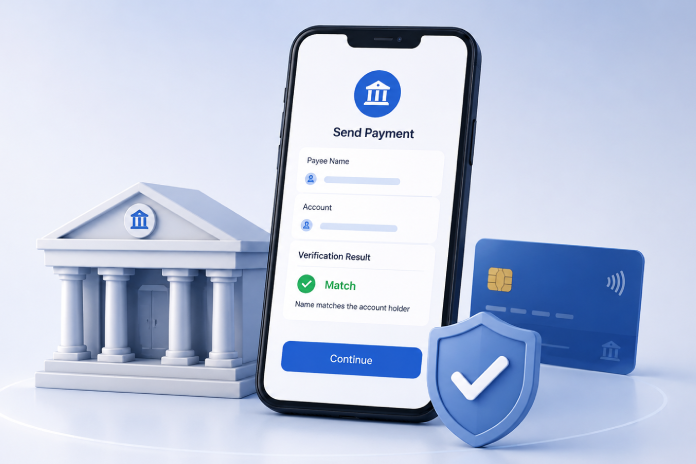
Payment security is no longer only about moving money quickly. It is also about making sure money reaches the right person or business. When a payer sends money, an IBAN or account number alone does not always confirm that the recipient is correct. A wrong digit, outdated supplier record, fake invoice, impersonation attempt, or incorrect beneficiary name can cause funds to move to the wrong account. Verification of Payee, also known as VoP, helps reduce this risk by checking whether the recipient name entered by the payer matches the account holder name connected to the recipient account. Before the payment is sent, the payer can receive a response such as:Match Close match No match Verification not possibleThis gives the payer an extra warning before money leaves the account. For BinaxPay users and businesses, this matters because secure payments are not only about speed. They are also about beneficiary accuracy, fraud prevention, compliance checks, transaction visibility, reconciliation, and user confidence. What Verification of Payee Means Verification of Payee is a pre-payment check that compares the recipient name with the account identifier used for a transfer. In a SEPA payment flow, the payer enters the beneficiary name and IBAN. The verification process checks whether the name matches the account holder information registered with the recipient’s payment provider. The result helps the payer understand whether the payment details look correct before confirming the transfer. A match gives stronger confidence that the beneficiary details are correct. A close match means the details are similar but need review. A no match is a stronger warning that the name and account details do not align. Verification not possible means the check could not be completed. This simple step can reduce both accidental payment mistakes and more serious fraud attempts. Why Name-Account Matching Matters Many payment problems happen because money is directed to the wrong account. A fraudster may send a fake invoice using a real-looking company name but a different IBAN. A scammer may impersonate a supplier, employee, executive, contractor, or service provider. A business may accidentally use outdated beneficiary details. A user may enter the right name but paste the wrong account number. Without name-account matching, the payment may still be processed if the IBAN is technically valid. Verification of Payee adds an important review step before the payment is released. It helps identify:Incorrect beneficiary names Wrong or outdated IBANs Fake invoice details Supplier impersonation Manual input mistakes Suspicious beneficiary changes Misdirected paymentsVoP does not remove every payment risk, but it gives the payer a clearer warning before approving the transaction. Why VoP Is Becoming Important for Payment Security As instant payments grow, money can move faster than ever before. Speed is useful, but it also leaves less time to detect mistakes or stop fraud. If money is sent instantly to the wrong account, recovery can be difficult. That is why payment security needs to happen before the transfer is completed. Verification of Payee supports safer payment execution by checking beneficiary details before money moves. It gives users and businesses a clearer decision point before confirming a transfer. Modern payment security depends on:Beneficiary accuracy Account-name checks Fraud warnings Payment confirmation Transaction monitoring Compliance controls Real-time visibility Reconciliation recordsVoP is becoming an important part of safer payment workflows for users, businesses, financial platforms, and payment providers. How Verification of Payee Works A VoP check happens before the payment is executed. The payer enters the recipient name and IBAN. The sending payment provider sends a verification request. The receiving side checks whether the provided name matches the account holder details. A result is returned before the payer confirms the payment. A typical flow looks like this:The payer enters the recipient name and IBAN. The payment provider sends a verification request. The receiving provider checks the account details. The system returns a match result. The payer reviews the response. The payer decides whether to continue, correct, or cancel.This creates a safer payment experience because the payer is not sending funds blindly. Match, Close Match, No Match, and Verification Not Possible VoP results help users understand the payment risk before sending money. Match means the name and account information align. This gives the payer stronger confidence that the beneficiary details are correct. Close match means the name is similar but not exact. This may happen because of spelling differences, abbreviations, legal entity names, trading names, initials, or formatting differences. The payer should review the details carefully before continuing. No match means the entered name does not match the account details. This is a stronger warning. The payer should check the beneficiary information before proceeding. Verification not possible means the check could not be completed. This may happen because of technical limitations, unavailable account data, unsupported payment routes, or other verification constraints. These responses help users make better decisions before money leaves the account. How VoP Reduces Payment Mistakes Not every payment problem is caused by advanced fraud. Many are caused by simple mistakes. A user may copy the wrong IBAN. A business may select the wrong supplier. A finance team may use outdated account details. A beneficiary name may be typed incorrectly. A company may have several vendors with similar names. Verification of Payee helps reduce these mistakes by checking the relationship between the name and the account. VoP can help prevent:Payments to the wrong person Supplier payment mistakes Invoice processing errors Wrong account selections Accidental beneficiary mismatches Internal finance-team errors Misdirected SEPA paymentsThis is especially useful for businesses that send payments to many suppliers, contractors, partners, employees, vendors, or service providers. How VoP Helps Fight Fraud Fraudsters often try to manipulate beneficiary details. A fake invoice may show the correct business name but include a fraudulent account number. A scammer may pretend to be a supplier and ask for payment details to be changed. An attacker may impersonate a director or finance manager and request an urgent transfer. Verification of Payee helps detect this type of manipulation before the payment is sent. It strengthens protection against:Invoice fraud Supplier impersonation Business email compromise Authorized push payment scams Fake beneficiary changes Payment redirection scams Account substitution fraudWhen the name and account details do not align, VoP gives the payer time to stop, check, and correct the payment before funds move. For how disputes and fraud workflows fit alongside prevention, see chargebacks, disputes, and fraud workflows. Why VoP Matters for SEPA Payments SEPA payments are widely used for euro transfers across participating European markets. As SEPA Instant becomes more common, payments can move very quickly. That makes pre-payment verification more important. Verification of Payee strengthens SEPA payment safety by checking beneficiary details before execution. For SEPA users and businesses, VoP supports:Safer euro transfers Stronger beneficiary accuracy Reduced misdirected payments Better fraud warnings More trust in instant payments Cleaner payment approval workflows Improved payment confidenceA faster payment system needs stronger checks. VoP helps create the balance between speed and safety. BinaxPay and Safer Payment Workflows BinaxPay is built around secure financial workflows, including onboarding, multi-currency accounts, dedicated IBANs, SEPA and SWIFT payment capabilities, cards, APIs, webhooks, KYC, KYB, AML checks, access controls, and reconciliation. These layers support safer payment operations. BinaxPay gives businesses the structure to manage:Account details Payment instructions Beneficiary records Card activity Payout flows Transaction status Compliance checks Webhook notifications Reconciliation records Audit-ready reportingVerification of Payee belongs to the same security direction: payment details should be checked before money moves, and payment activity should remain visible after it moves. Beneficiary Accuracy Builds Payment Confidence A payment is only safe when the beneficiary is correct. BinaxPay payment workflows depend on accurate account details, verified users, strong controls, and clear records. Beneficiary accuracy helps reduce payment errors and improves confidence before a transfer is approved. VoP strengthens beneficiary accuracy by asking one important question: Does the name entered by the payer match the account that will receive the money? This check helps users and businesses avoid sending money to the wrong destination. Payment confidence improves when the payer can clearly see:Who they are paying Which account is being used Whether the name matches Whether the details need review Whether the payment should be corrected Whether the payment can continueThis makes payment approval more informed and more secure. VoP for Business Payment Operations Businesses often manage many beneficiaries. They may pay suppliers, contractors, staff, service providers, vendors, marketplaces, partners, and cross-border recipients. With many payment records, mistakes can happen. Verification of Payee gives finance teams a stronger review layer before payment execution. It helps businesses:Validate beneficiary details Reduce supplier payment errors Detect suspicious account changes Improve finance-team confidence Reduce manual review pressure Prevent payment redirection fraud Keep cleaner payment recordsFor growing businesses, this can reduce operational risk and improve payment discipline. VoP and Reconciliation Verification of Payee happens before a payment is sent, but it can also support better reconciliation after the payment is completed. When beneficiary data is accurate, transaction records are easier to match. Finance teams can connect payments to the correct supplier, invoice, account, card, or settlement record. Better beneficiary accuracy supports:Cleaner payment records Better supplier matching Fewer unexplained payments Easier transaction review Improved audit trails Better payment reporting Faster reconciliationBinaxPay supports reconciliation through transaction records, APIs, webhooks, statements, and account-level reporting. VoP strengthens the data quality before the payment enters the wider recordkeeping process. VoP and API-Driven Payments Verification of Payee also matters for platforms and businesses that use APIs to send or manage payments. API-driven payments allow businesses to automate payment workflows. But automation needs strong controls. If a system sends payments automatically, beneficiary accuracy becomes even more important. VoP-style checks support safer automation by verifying payment details before execution. For API-driven payment environments, this supports:Safer payout workflows Beneficiary validation Reduced automated payment errors Better fraud prevention Stronger approval logic Clearer payment status Improved reconciliationBinaxPay uses APIs and webhooks to support account creation, card issuing, payouts, and reconciliation. Strong beneficiary data helps these workflows run more safely and clearly. VoP Does Not Replace Other Security Controls Verification of Payee is important, but it is not the only payment security layer. It checks whether the payee name matches the account identifier. It does not replace KYC, KYB, AML screening, sanctions checks, device monitoring, fraud scoring, transaction limits, approval workflows, or user education. A strong payment security model needs multiple layers, including:Identity verification Business verification AML checks Sanctions screening Account controls Beneficiary accuracy Transaction monitoring Payment alerts Approval workflows Reconciliation Audit recordsBinaxPay brings many of these controls into its account, payment, card, API, and compliance infrastructure. For shared compliance vocabulary, see the KYC, KYB, AML, and CFT compliance dictionary. VoP strengthens the payment journey by adding another important check before execution. Final Thought Trust in payments depends on accuracy. Users need to trust that money is going to the right person or business. Businesses need to trust that supplier records are correct. Platforms need to trust that automated payments are not moving funds to wrong or manipulated accounts. Verification of Payee builds trust by making payment details more transparent before money moves. It gives users and businesses a chance to stop, review, and correct payment details when something does not match. In modern finance, payment trust is not only about speed. It is about knowing that the right money is going to the right destination.
- BinaxPay Team
- 26 May, 2026
- 9 mins read
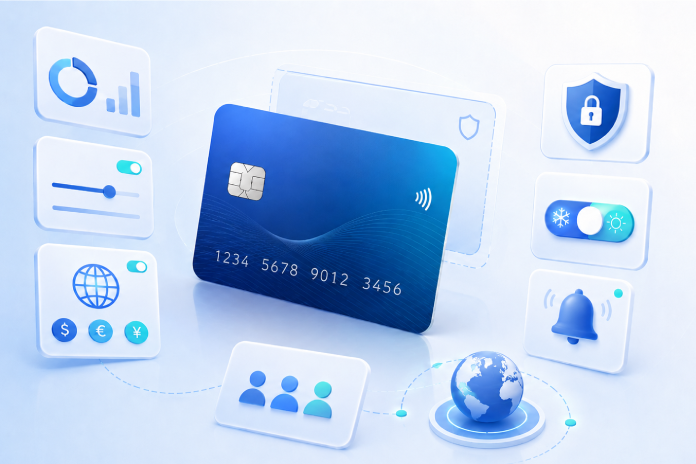
Card Control at BinaxPay: Smarter Limits, Safer Spending, and Real-Time Protection
Cards are no longer simple payment tools. They are becoming intelligent financial controls connected to accounts, wallets, security systems, spending rules, and real-time monitoring. Modern users and businesses do not only want a card that works. They want a card they can control. They want to set limits, freeze usage, receive alerts, manage online payments, protect card data, separate business spending, and react quickly when something looks suspicious. This is where BinaxPay Card Control becomes important. BinaxPay’s card control layer is designed to give users and businesses more visibility, flexibility, and protection over how cards are created, used, monitored, and secured. It supports virtual cards, physical cards, spend limits, merchant controls, freeze and unfreeze actions, PIN reveal, 3-D Secure, real-time alerts, multi-currency spending, business card controls, and integration with account activity. The goal is simple: give every card stronger control before, during, and after every transaction. For how virtual and physical programs are issued and managed at scale, see card issuing capabilities: virtual, physical, and program management. 1. Why Card Control Matters Card payments are fast, global, and convenient. But that same speed can also create risk. A card can be used online, in-store, across borders, for subscriptions, travel bookings, supplier payments, digital services, business expenses, and daily spending. Without proper controls, card activity can become difficult to monitor and harder to protect. BinaxPay Card Control helps reduce this risk by giving users direct tools to manage card behavior. Card controls help protect against:Unauthorized spending Lost or stolen card misuse Suspicious online payments Subscription misuse Excessive employee spending High-risk merchant activity Unusual cross-border transactions Card testing attacks Unclear business expensesInstead of treating cards as open payment instruments, BinaxPay connects them to a controlled financial environment. 2. Virtual Cards for Digital Spending Virtual cards are one of the most useful tools in modern fintech because they allow users and businesses to create card credentials without waiting for a physical card. With BinaxPay, virtual cards can be used for online payments, subscriptions, vendor payments, travel bookings, advertising platforms, software tools, marketplaces, and business expenses. Virtual cards help users:Create cards quickly Separate spending by purpose Reduce exposure of main card details Control online subscriptions Manage vendor payments Track digital spending clearly Pause or replace a card without affecting the full accountFor businesses, virtual cards are especially powerful. A company can create separate cards for advertising, software, travel, procurement, or team expenses. If one card needs to be frozen or replaced, other cards can continue operating normally. 3. Physical Cards for Everyday Use Physical cards remain important for in-person payments, travel, hotels, transport, restaurants, retail purchases, and business spending. BinaxPay supports physical card access alongside virtual cards, giving users one connected card experience for both digital and real-world payments. Physical cards support:In-store purchases Travel spending Hotel and transport payments Business expenses Everyday personal spending Supported ATM-related usage Global merchant acceptance where supportedFor users and companies operating internationally, physical cards remain essential because not every payment happens online. 4. Spend Limits and Usage Rules One of the strongest parts of card control is the ability to define how a card can be used. BinaxPay Card Control supports spend rules that help users and businesses manage transaction behavior before spending happens. Spend controls can include:Per-transaction limits Daily limits Monthly limits Card-level spending caps Business expense limits Employee spending controls Travel budget controls Project-based spending rulesThis gives users and companies better financial discipline. A card can be created for a specific purpose and limited to that purpose. For example, a business can create one card for advertising, one for software subscriptions, one for travel, and one for procurement. Each card can have its own spending logic, making financial activity easier to track and safer to manage. 5. Merchant and Category Controls Not every card should work everywhere. A travel card may not need to work for gaming websites. A software subscription card may not need to work in physical retail stores. An employee expense card may need to be limited to approved merchant categories. BinaxPay’s card control model supports merchant and category-based restrictions to help align card usage with its intended purpose. Merchant controls can help protect:Company spending policies Department budgets Subscription management Procurement activity Travel expense rules Employee card usage Risky or unauthorized merchant activityThis turns the card into more than a payment method. It becomes a controlled spending tool. 6. Freeze and Unfreeze Controls Freeze and unfreeze controls are among the most practical card security features. If a user misplaces a card, sees suspicious activity, wants to pause spending, or needs to review employee card usage, the card can be frozen. If the issue is resolved, the card can be unfrozen. BinaxPay freeze and unfreeze controls help users respond quickly to:Lost cards Suspected card compromise Unusual transactions Temporary spending pauses Employee spending reviews Travel-related security concerns Subscription disputesThe benefit is immediate action. Users do not need to wait for fraud to happen. They can pause the card first, review the situation, and then decide the next step. 7. 3-D Secure for Online Payments Online card payments need stronger protection because the card is not physically present. 3-D Secure adds an authentication layer to online card payments, helping verify that the transaction is being performed by the legitimate cardholder. BinaxPay supports 3-D Secure as part of its card security stack. 3-D Secure helps protect:Online purchases Subscription payments Travel bookings E-commerce transactions High-risk digital checkouts Card-not-present paymentsThis makes online card usage safer because the transaction does not rely only on card number, expiry date, and security code. Authentication can be added when needed. Strong authentication, risk rules, and authorization controls are explained in 3DS, risk rules & card security. 8. PIN Reveal for Secure Card Access PIN access is important for physical card usage. BinaxPay supports secure PIN reveal, allowing users to access their card PIN when needed while keeping sensitive card information protected. PIN reveal supports:Physical card usage In-person payments Supported ATM-related access Safer cardholder control Reduced need for insecure PIN storageThe PIN should always be handled securely. BinaxPay’s card control experience helps users access it only when needed. 9. Real-Time Alerts and Card Activity Visibility Card fraud and misuse can happen quickly, so users need fast visibility. BinaxPay supports real-time card activity alerts, helping users and businesses see important card events as they happen. Real-time alerts can support:Transaction notifications Suspicious activity awareness Spending confirmations Failed payment visibility High-value transaction alerts Merchant activity visibility Unusual pattern detectionThis gives users more control because they do not need to wait for a monthly statement to understand what happened. Important card activity can be reviewed much earlier. For businesses, alerts also help finance teams monitor spending, detect unusual behavior, and respond faster. 10. Tokenized Card Data and Safer Digital Payments Tokenization helps protect card data by replacing sensitive card details with secure digital tokens. This is important for online payments, wallet provisioning, merchant card storage, subscription payments, and card-on-file transactions. BinaxPay’s card infrastructure is designed with secure card data handling and tokenized payment principles. Tokenization helps protect:Online purchases Digital wallet usage Card-on-file payments Subscription payments API-based card workflows Sensitive card credentialsTokenization does not remove every risk, but it reduces unnecessary exposure of raw card details. Foundational card identifiers and tokenization concepts are covered in card issuing basics (BIN, PAN, CVV, tokenization). 11. Multi-Currency Spending BinaxPay’s card ecosystem is connected to multi-currency financial activity. This is important because users and businesses often spend across different countries, currencies, merchants, and platforms. A card may be used for international travel, online services, supplier payments, subscriptions, or global commerce. Multi-currency card usage helps support:International spending Travel payments Global online purchases Subscription platforms Business expenses Supported currency management Clearer transaction recordsWhen cards connect to wallets, FX, payments, and account activity, users gain a clearer view of how money is being spent across markets. 12. Business Card Controls for Teams Business cards need stronger control than personal cards because companies manage spending across employees, departments, branches, contractors, partners, and projects. BinaxPay supports business card control features that help companies manage team spending with better structure. Business card controls can support:Employee expense cards Department cards Project-based cards Supplier payment cards Travel cards Procurement cards Controlled team spending Card activity reportingWith spend limits, merchant restrictions, alerts, and freeze controls, businesses can give teams access to spending tools without losing visibility. 13. Card Control for Reconciliation Card spending must be easy to understand after the transaction happens. Users and businesses need to know what was spent, where it was spent, who used the card, what currency was involved, whether the transaction succeeded, and how the activity connects to the account. BinaxPay connects card activity with wider account, wallet, payment, FX, and transaction records. This supports:Transaction history Merchant details Cardholder activity Currency tracking Expense records Failed payment review Spending reports Audit trails Account visibilityWithout reconciliation, card spending becomes difficult to manage. With clear records, card activity becomes easier to review, report, and control. Matching card activity to ledger and settlement records is part of ledger consistency, reconciliation, and settlement. 14. Card Fraud Monitoring and Risk Signals Modern card security must look beyond the transaction amount. Fraud monitoring can review patterns such as transaction velocity, merchant behavior, device signals, location patterns, spending history, and unusual usage. BinaxPay’s card control layer is designed to support risk monitoring across card activity. Risk monitoring can help detect:Unusual online spending Rapid card testing behavior Suspicious merchant activity Transaction velocity spikes High-risk location patterns Abnormal purchase timing Repeated failed attempts Unusual cross-border usageCard fraud often appears as a pattern. One transaction may look normal, but several fast transactions from a new merchant, region, or device can indicate risk. Broader monitoring and risk intelligence approaches are outlined in AI-enhanced monitoring for fraud and risk. 15. Card Control as a Trust Layer Card control is becoming one of the most important layers in modern finance. Cards are no longer only about payment access. They are about trust, visibility, control, and protection. BinaxPay brings these controls into one connected card environment by combining:Virtual cards Physical cards Spend limits Merchant controls Freeze and unfreeze 3-D Secure PIN reveal Real-time alerts Tokenized card data Multi-currency spending Business card controls Risk monitoring Account and wallet integrationThis makes the card part of a wider financial security system, not just a plastic or digital payment credential. Conclusion Card control is now a core requirement for modern financial platforms. Users want safer spending. Businesses want better team expense control. Platforms want embedded card experiences. Everyone wants faster visibility, stronger protection, and more flexible payment tools. BinaxPay Card Control gives users and businesses the ability to issue, monitor, restrict, pause, authenticate, and manage cards from one connected financial environment. The value is not only the ability to spend. The real value is the ability to spend with control.