Digital Tokens at BinaxPay: Securing Payments, Assets, and Financial Data
-
 BinaxPay Team
 - 21 May, 2026
- 9 mins read
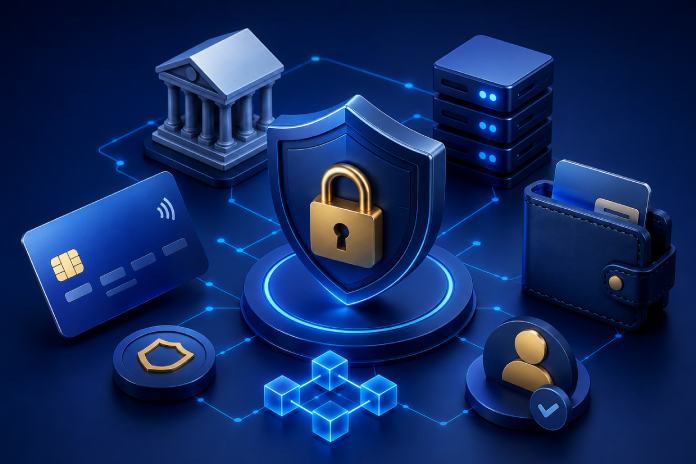
Tokenization is becoming one of the most important technologies in modern finance. It allows sensitive payment data, card credentials, account references, and even financial assets to be represented as secure digital tokens instead of exposing the original information directly. For BinaxPay, tokenization fits naturally into a private banking and financial infrastructure environment where users, businesses, merchants, partners, cards, APIs, ledgers, and settlements must operate securely across multiple regions and financial rails.
At a simple level, tokenization replaces sensitive financial data with a secure digital substitute. In card payments, Mastercard explains that tokenization replaces a real card number with a stand-in number so the merchant does not see or store the original card number. Visa also describes tokenization as turning sensitive payment details into unique token values that can reduce risk and support smoother payment experiences.
In a wider financial infrastructure context, tokenization goes beyond cards. The IMF describes tokenized finance as the representation of financial assets and liabilities on programmable digital ledgers, where tokenization can support atomic settlement, continuous liquidity management, and embedded compliance.
1. Payment Tokenization: Protecting Sensitive Payment Data
Payment tokenization replaces sensitive payment information with a secure token that can be used for processing without exposing the original details.
This is important because payment systems handle card numbers, account references, wallet IDs, merchant identifiers, transaction records, and customer payment credentials. If these values are exposed in raw form, they can create fraud, data leakage, and compliance risks.
Capabilities:
- Card number replacement with secure tokens
- Payment credential protection
- Reduced exposure of sensitive data
- Safer merchant transactions
- Secure online and in-app payments
- Lower risk during data storage
- Safer payment processing across APIs
A BinaxPay user can add a card for online payments. Instead of storing or exposing the full card number across systems, the platform can use a secure payment token to process future payments safely.
2. Card Tokens for Safer Digital Payments
Card tokens are secure digital substitutes for real card details. They are commonly used for online payments, mobile wallets, subscriptions, recurring billing, and saved-card checkout. BinaxPay describes card infrastructure that supports virtual cards, physical cards, merchant acceptance, spend controls, global digital commerce, and secure tokenization for sensitive data—building on foundational concepts explained in card issuing basics (BIN, PAN, CVV, tokenization).
Capabilities:
- Virtual card tokenization
- Physical card token protection
- Mobile wallet card tokens
- Subscription payment tokens
- Merchant card-on-file tokens
- One-time or limited-use payment credentials
- Fraud protection during card transactions
A customer creates a virtual BinaxPay card for subscription payments. The subscription merchant does not need to store the original card details. A tokenized card reference can be used instead, reducing exposure if the merchant system is compromised.
3. Account Tokens for Private Banking Workflows
Account tokenization protects sensitive account identifiers by replacing them with internal tokens. This is useful in private banking, business accounts, merchant settlement, API payouts, and partner integrations.
Instead of exposing full account details across every service, a platform can use internal account tokens to route transactions, connect wallets, trigger payouts, or reconcile balances securely.
Capabilities:
- Bank account reference tokenization
- Wallet ID masking
- Merchant account tokens
- Partner account references
- Beneficiary tokenization
- Internal routing identifiers
- Safer API-based account actions
Business connecting its BinaxPay account to an external platform for payouts. The external platform does not need direct access to full account details. It can reference a secure token that maps to the correct account inside BinaxPay’s controlled environment.
4. Tokenization Across APIs and Partner Integrations
Modern financial platforms rely heavily on APIs. BinaxPay Hub describes the API layer as the gateway to the BinaxPay ecosystem, covering wallet creation, balance checks, money movement, FX, merchant payments, card issuing, transaction monitoring, KYC/KYB validation, and treasury monitoring. How partners plug into that layer is summarized in technology integration partnerships via API.
In this environment, tokenization helps APIs move data safely. Instead of passing sensitive information repeatedly between partners and internal systems, the platform can use secure tokens.
Capabilities:
- Tokenized API references
- Secure webhook identifiers
- Masked transaction IDs
- Partner-specific token mapping
- Reduced exposure in API payloads
- Safer reconciliation between systems
- Controlled access to sensitive data
A partner can use BinaxPay APIs to create accounts, issue cards, and send payouts. Each sensitive object can be represented by secure tokens, allowing the partner to operate efficiently without exposing raw customer, card, or account data.
5. Tokenized Cards in Mobile Wallets and Online Commerce
Tokenization is widely used in mobile wallets and online commerce. Mastercard explains that tokens can be used in-store, in-app, online, and for saved card-on-file purchases. It also notes that cryptograms add another layer of security by helping verify each transaction.
For BinaxPay, this matters because users and businesses may need cards for subscriptions, online shopping, travel, advertising platforms, digital services, and marketplace payments.
Capabilities:
- Apple Pay and Google Pay-style tokenized cards
- Online card-on-file tokens
- Merchant-specific tokens
- Secure recurring payments
- One-time checkout tokenization
- Device-linked payment credentials
- Transaction-level authentication signals
A user may add a BinaxPay virtual card to a mobile wallet. When the user pays online or in-store, the tokenized card credential is used instead of exposing the real card number.
6. Asset Tokenization: Turning Financial Claims Into Digital Records
Asset tokenization is different from payment tokenization. Payment tokenization protects sensitive credentials. Asset tokenization represents ownership or rights in an asset as a digital token.
The IMF describes tokenization as the representation of financial assets and liabilities on programmable digital ledgers, and says it is becoming a structural shift in financial architecture rather than just a small efficiency improvement.
Capabilities:
- Digital representation of financial assets
- Tokenized claims on underlying assets
- Programmable ownership records
- Digital asset lifecycle tracking
- Automated settlement logic
- Transparent transaction records
- Better coordination between asset and payment flows
A financial asset such as a bond, fund share, or treasury product could be represented digitally so ownership, transfer, settlement, and reporting can be coordinated through secure infrastructure.
7. Tokenized Money and Settlement Infrastructure
Tokenization is also becoming important for settlement. The BIS says tokenized platforms involving central bank reserves, commercial bank money, and government bonds could help form the foundation of a next-generation monetary and financial system. It also explains that tokenization can integrate messaging, reconciliation, and settlement into a single seamless operation.
For BinaxPay, the practical lesson is clear: tokenization is not only about protecting card data. It can also support faster settlement, better reconciliation, stronger auditability, and more programmable financial flows. Settlement and treasury movement patterns across regions are summarized on the Money Flow hub.
Capabilities:
- Tokenized settlement references
- Faster reconciliation
- Ledger-based transaction records
- Automated settlement conditions
- Better payment traceability
- Reduced manual matching
- Cross-rail settlement coordination
A merchant receives payments from cards, bank transfers, and wallets. Tokenized settlement references can help connect each transaction to the correct ledger entry, payout, fee, and reconciliation report.
8. Tokenization and the BinaxPay Ledger
A strong tokenization system needs a strong ledger. Tokens only work properly when every tokenized action connects to accurate balances, transaction records, audit logs, and settlement states.
BinaxPay operation updates the global ledger instantly, including card payments, mobile money payouts, bank transfers, wallet transfers, FX conversions, and merchant settlements. For how ledger postings stay aligned across channels, see ledger consistency, reconciliation & settlement.
Capabilities:
- Token-to-ledger mapping
- Real-time balance updates
- Transaction reference tracking
- Tokenized settlement records
- Fraud-resistant audit trails
- Multi-currency ledger support
- Reconciliation across payment channels
Example: A card payment reduces a user’s EUR wallet balance. The tokenized transaction reference connects the payment, ledger movement, FX action, merchant settlement, and final reporting record.
9. Security Benefits of Tokenization
The main security benefit of tokenization is simple: sensitive data is not repeatedly exposed.
If a token is stolen, it should not be useful outside the secure system that issued and controls it. This reduces risk compared with exposing full card numbers, account identifiers, or sensitive payment credentials across many services.
Mastercard states that tokenization helps secure digital payments by turning sensitive payment details into unique token values and can reduce fraud risk. Mastercard also explains that tokenization protects accounts because merchants do not see or store the real card number.
Capabilities:
- Lower exposure of raw payment data
- Safer card-on-file storage
- Reduced fraud opportunities
- Better protection in API workflows
- Merchant data risk reduction
- Stronger transaction authentication
- Secure credential lifecycle management
A merchant platform stores a tokenized BinaxPay card for recurring billing. If the merchant database is attacked, the attacker does not receive the original card number.
10. Tokenization and Compliance Control
Tokenization supports compliance because it helps reduce exposure of sensitive data and creates more controlled financial workflows.
In a private banking and fintech environment, compliance teams need to understand which user, business, merchant, account, card, transaction, and settlement event is connected to each action. Tokenization helps by creating controlled references while keeping the original sensitive data protected.
BinaxPay has a unified compliance engine across rails where transactions pass through sanctions screening, PEP checks, AML rules, behavioral analysis, corridor risk scoring, and device fingerprint checks.
Capabilities:
- Tokenized compliance records
- Controlled access to sensitive data
- Safer KYC/KYB document references
- AML-linked transaction tokens
- Audit-friendly event tracking
- Reduced personal data exposure
- Better separation of duties
Example: A compliance officer reviews a suspicious transaction. The system can connect the tokenized transaction ID to the customer profile, payment route, risk score, and audit history without exposing unnecessary sensitive data to every internal user.
11. Tokenization for Reporting and Reconciliation
Tokenization also supports reporting. Every tokenized payment, card transaction, account movement, merchant settlement, and ledger event can be linked to a clear reference.
BinaxPay unifies reporting and reconciliation across mobile money logs, bank settlement, card transactions, FX records, bulk payouts, and merchant settlements.
Capabilities:
- Tokenized transaction references
- Merchant settlement tracking
- Card transaction mapping
- FX record linking
- Bulk payout reconciliation
- Audit-ready payment history
- Cross-channel reporting
12. Programmable Finance and Future Settlement Use Cases
Tokenization becomes more powerful when combined with programmable finance. The Federal Reserve has described tokenization as involving both the rails assets move on and the assets themselves, including smart-contract functionality that can execute transactions when predefined conditions are met. It also notes that tokenization can support collateral mobility, liquidity management, and flexible settlement arrangements.
For BinaxPay, the practical direction is not hype. It is infrastructure: safer payments, stronger ledgers, clearer settlement, better reconciliation, and controlled access to financial data.
Capabilities:
- Programmable settlement rules
- Conditional transaction execution
- Automated escrow-style workflows
- Collateral and liquidity tracking
- Multi-asset transaction support
- Smart reconciliation triggers
- Real-time settlement visibility
A business payout could be released only when compliance checks, ledger balance, beneficiary validation, and corridor rules are all satisfied. Tokenized references help each part of the workflow connect safely.
Conclusion
Tokenization is one of the core technologies behind safer and smarter financial infrastructure. It protects payment credentials, secures card transactions, reduces exposure of sensitive account data, supports API-based finance, strengthens compliance, and improves settlement visibility.
For BinaxPay, tokenization is not only a security feature. It is part of how modern private banking and financial infrastructure can operate across cards, wallets, accounts, payments, APIs, ledgers, merchants, partners, and global settlement flows.
Payment tokenization protects sensitive card and account data. Asset tokenization shows how financial claims can become programmable digital records. Settlement tokenization points toward a future where money movement, reconciliation, compliance, and reporting can work together in real time.
The result is a stronger financial system: more secure, more connected, more programmable, and better prepared for the next generation of digital finance.